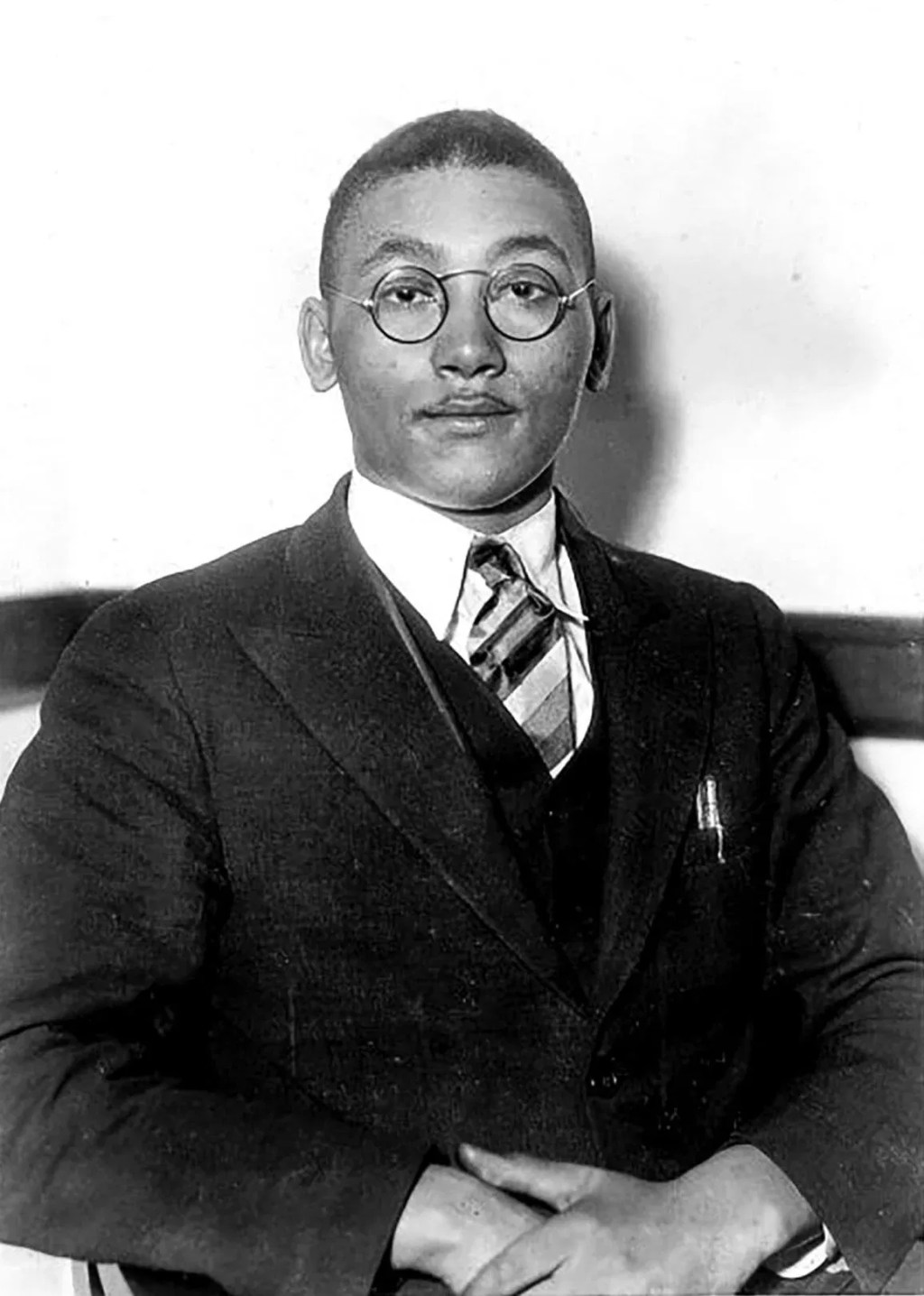
Today, we remember Angelo Herndon, a member of the Communist Party and organizer for the CPUSA Unemployment Council. He was a leader who demanded unemployment relief, breaking barriers in Georgia. His efforts for the working class didn’t go unpunished, and he was charged with Insurrection, tried, and sentenced to 20 years on the chain gang. In the years that followed, Herndon continued his work on behalf of minorities, immigrants, and the working class. Today, the Atlanta Club of the Communist Party is named the Angelo Herndon Club in his honor. Those who write history may not want us to remember the name Angelo Herndon, but as members of the Communist Party of the United States, we must never forget him.
Born in Wyoming, Ohio, Angelo Herndon moved to Lexington, Kentucky, to work in the mines. By 1930, he moved to Birmingham, Alabama, to work for the Tennessee Coal, Iron, and Railroad Company. He was given a copy of the Communist Manifesto by a member of the Unemployed Councils, a group that is affiliated with the Communist Party. Impressed by the party’s efforts in the south, Herndon joined the party in 1930 at 17. He was arrested several times for labor organizing and was moved to Atlanta, Georgia.
His involvement with the Unemployment Council led to his popularity for labor organizing. After leading an integrated march on the courthouse demanding unemployment relief, the first of its kind in segregated Georgia, he was arrested. When Herndon’s apartment was searched, he was charged with being a Communist when party publications were found. He was then charged with Insurrection, tried, and sentenced to 20 years on the chain gang.
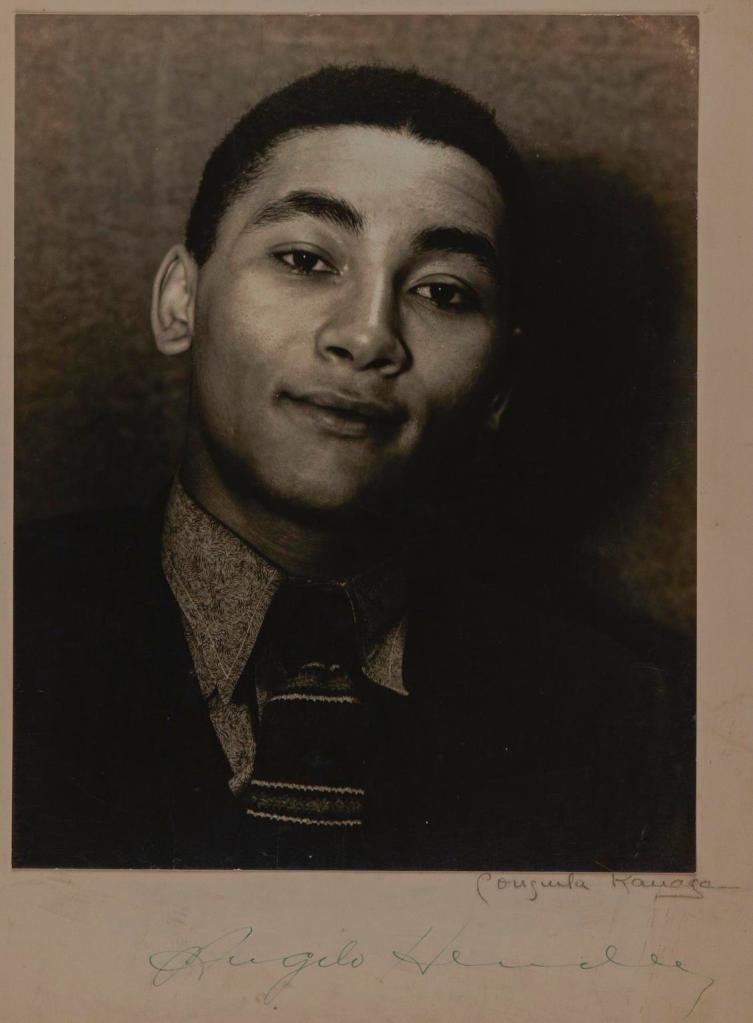
The campaign for his freedom became a major cause for the people’s movement and the Party, along with that of the Scottsboro boys. Twice, his case reached the US Supreme Court on appeal. On April 26, 1937, a narrow five-to-four majority of the Court ruled in Herndon’s favor, striking down Georgia’s insurrection statute as unconstitutional and a violation of the First Amendment.
Herndon became an important Communist Party activist in the late 1930s. He was elected vice-president of the Young Communist League and ran as a candidate for the New York State Assembly. He left the Party around the time of the struggle against Browder’s opportunism. The current CPUSA club in Atlanta is named in his honor, the Angelo Herndon Club.
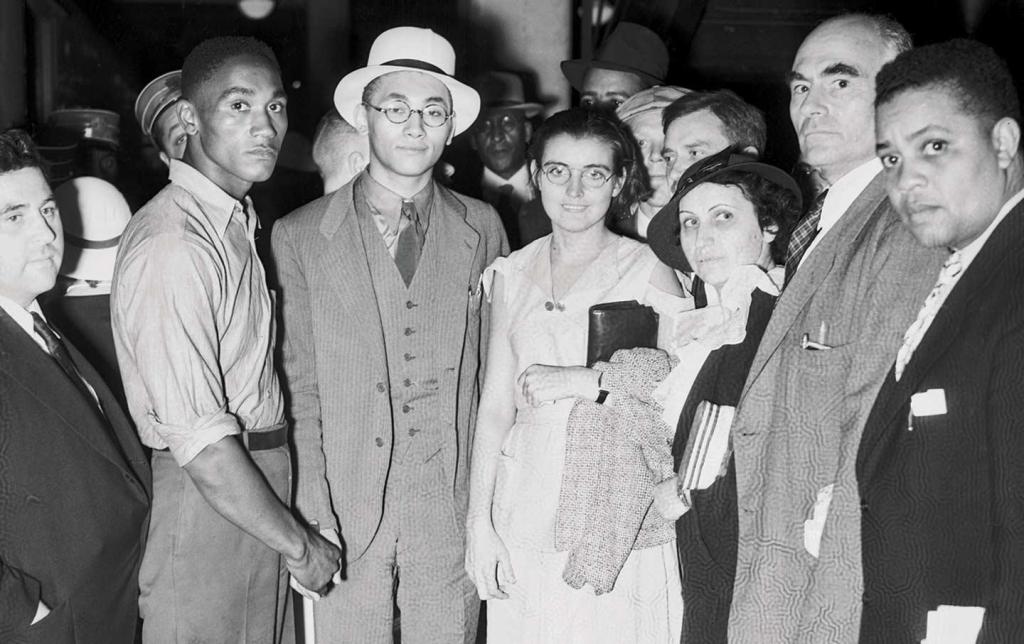
Angelo’s brother Milton, also a CPUSA member, was section leader of the Mackenzie–Papineau Battalion in the Abraham Lincoln brigade, fighting Franco’s fascist forces in Spain. He was killed in action along with his entire machine gun company while supporting the advance into Fuentes de Ebro, a small town southeast of Zaragoza.
The following is taken from a piece written by Herndon in the Daily Worker, April 20, 1935:
“The Southern rulers are far more frightened today than they were at the time of my arrest in July, 1932. I had led a demonstration of a thousand people to the Fulton County courthouse in Atlanta, for unemployment relief. Though the County Commissioners swore there wasn’t a cent to be had, they voted, almost at once, an appropriation of $6,000 for the hungry people.
This demonstration frightened the Georgia ruling class almost out of its wits. Today the struggle for unemployment relief, for unemployment insurance, is far stronger all over the United States than it was at that time…
More and more the American rulers are resorting to fascist attacks, fascist laws, fascist methods to crush the workers. “Criminal syndicalism” laws, long unused in many states, are now being dusted off and brought forward as the means of repressing the militant movements of the workers… These laws are as repressive to the rights of the workers to speak, meet, organize, as is the “slave insurrection” law of Georgia.
Mass pressure has again snatched the Scottsboro boys from the electric chair. Mass pressure forced the fascist hangmen to release Dimitroff and his comrades in Germany. If we apply the same pressure to [this] case, the Supreme Court will be forced to yield.
Every day and every hour counts. FLOOD the Supreme Court with telegrams and resolutions.
Everyone who wants to protect his rights, has his place in this movement.”
The legacy Angelo Herndon left behind is one of leadership and orange in the face of adversity. His belief in racial equality and working-class solidarity moved him forward. It led to his role of leadership within and outside the party. His name might not be one that many people know, and it should be. Angelo is an example of what one person can do among his fellow organizers.
 LOUISVILLE CPUSA
Leave a comment